As Formula 1 gears up for a new era with radically different cars, Pirelli finds itself in a delicate position. The pressure is on to improve its wet tires, but regulatory and technical challenges are mounting. Amidst data uncertainty and the urgency for performance, the battle for safety on wet tracks has never been more intense.
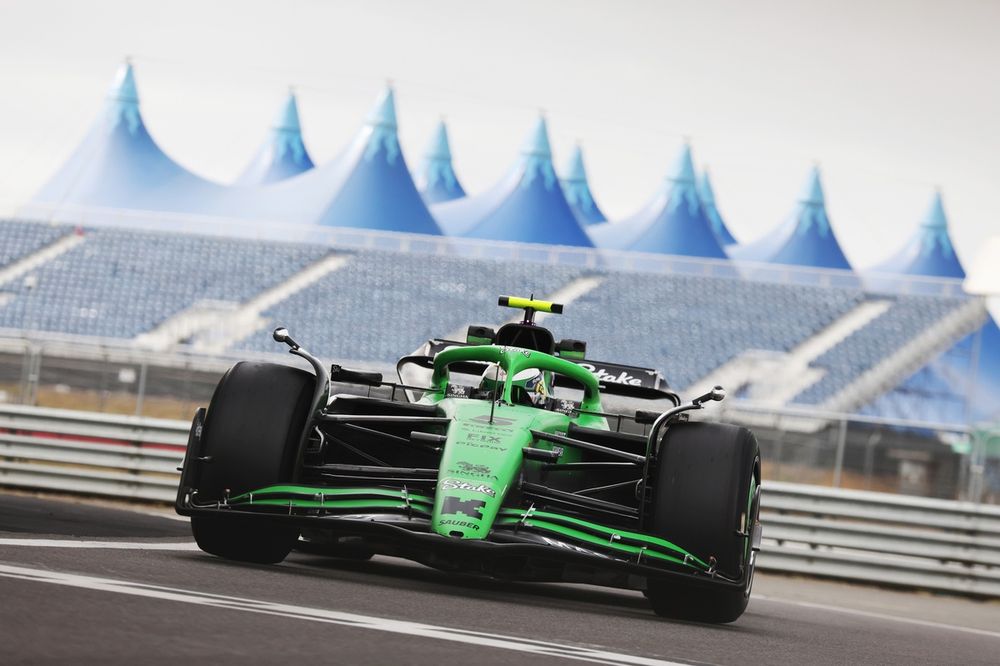
Racing in the Rain: A Headache for F1
Wet races have always been a thorny issue in the world of Formula 1, especially during the last generation of cars from 2022 to 2025. With their ground effect diffusers, these machines sprayed so much water that visibility for drivers often became a nightmare, even in light rain. Race control, concerned for safety, didn’t hesitate to halt Grands Prix, causing confusion among fans and drivers who deemed these stoppages excessive at times.
This caution was also tied to the perceived poor performance of Pirelli’s wet tires. Intermediate and full wet tires, although developed for these conditions, were often criticized for their rapid degradation and limited effectiveness, only performing well in torrential downpours, which often meant red flags.
Pirelli Up Against a Wall

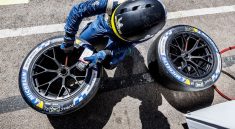
Pirelli engineers at Monza.
In this delicate context, Pirelli had already announced its intention to revise its wet tire range by introducing a third compound, a sort of “super intermediate” between the intermediate and full wet tires. However, a major obstacle looms ahead: the regulatory changes set for 2026. With narrower tires and the end of ground effect, Pirelli finds itself navigating uncertainty, severely lacking real data from current cars to refine its ideas.
A rainy start to the season could, however, prove beneficial for the Italian brand. It would allow them to assess the actual level of water spray generated by the new generation of cars, providing crucial data to guide tire development.
“For now, no one can decide [on modifying Pirelli’s wet tire range], as we still don’t know the level of spray,” said Mario Isola, Pirelli Motorsport director. “I’m not saying I hope for rain in the early races, but a wet race would give us valuable information.”
He continued: “Without the diffuser that sent a lot of water into the air, visibility should be slightly better [in 2026]. Additionally, the tires are a bit narrower and spray less water. It remains to be seen if that will be enough for race control to allow running.”
Rare Testing Opportunities
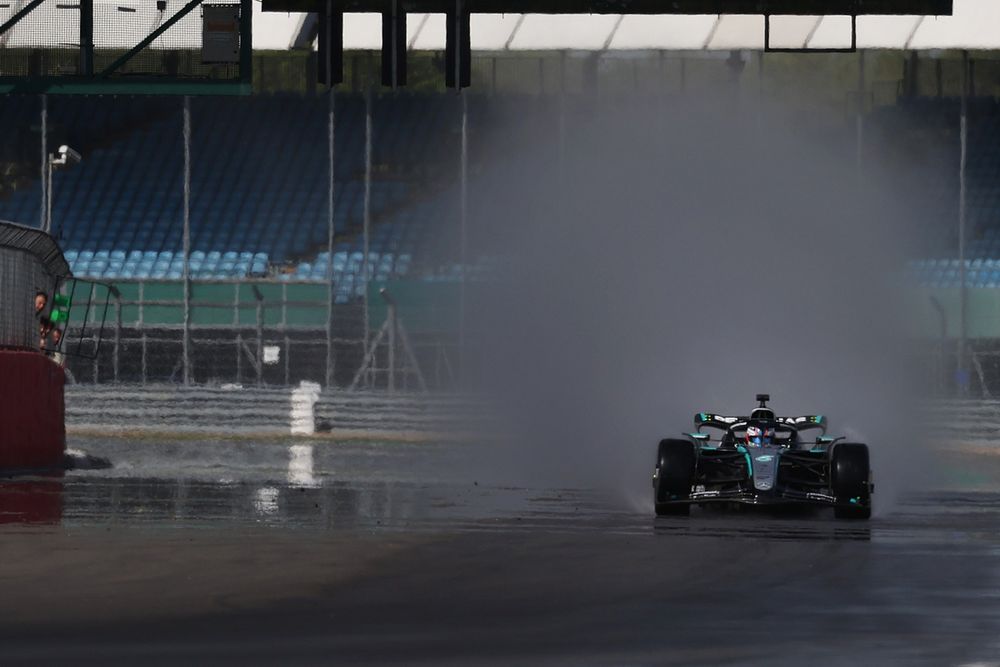
Mercedes during Pirelli testing at Silverstone in 2025.
Improving its wet tire range is a real puzzle for Pirelli, as opportunities for testing in wet conditions are extremely rare. So far, tests have primarily taken place at European circuits equipped with watering systems, like Paul Ricard or Magny-Cours. However, a glimmer of hope has emerged with the announcement of tests at the Bahrain circuit, known for its abrasive asphalt and high tire demands.
“We are trying to organize a wet test here in Bahrain,” Isola explained. “I’m very confident, as the circuit has a plan to wet the entire track, not with tankers but through another watering system.”
This test would be crucial to understand how the new tires will react on a particularly demanding circuit. “This is something that rarely happens. So we want to make the most of this opportunity,” he added. “We need a constant level of water because clearly the risk is that the inconsistency of the water level is greater than the differences between prototypes.”
Mario Isola also revealed that a test should take place at the Bahrain circuit before the first Grand Prix of the season at the end of February. Two teams, McLaren and Mercedes, will participate with “mule” cars, meaning modified older cars designed to replicate the specifications of the 2026 regulations.
A Turning Point for Safety in F1
If Pirelli can improve its wet tires through these tests and reliable data, it could mark a decisive turning point for safety in Formula 1. Suitable tires would not only enhance driver visibility in wet conditions but also reduce race interruptions, ensuring a continuous spectacle for fans. This would be a breath of fresh air in a sport where every second counts and emotions run high.
In summary, the coming months will be crucial for Pirelli. Between regulatory pressure and rising expectations from fans and drivers, the tire supplier must double down to prove it can meet modern challenges while ensuring safety on track. Formula 1 is in constant evolution, and the stakes have never been higher.
Conclusion: Towards a Rainy Future?
In the medium term, the pressure on Pirelli will not lessen. With the evolution of cars and regulations, the supplier must anticipate and innovate to ensure its wet tires are up to par. If these tests yield positive results and performance improves, it could redefine the experience of racing in the rain in Formula 1. Fans could then rediscover the thrill of battles on wet tracks, rather than endure the incessant interruptions that have marred recent years. The future looks as fascinating as it is uncertain, but one thing is for sure: Pirelli cannot afford to make mistakes.