The wings and other aerodynamic appendages have radically changed the landscape of modern MotoGP, bringing both innovation and controversy. While these elements have become essential, their history is one of a struggle between performance and safety, between technical progress and fairness on the track.
The Bold Beginnings of Wings
The turning point occurred in the mid-2010s, specifically in 2015, when Ducati dared to introduce front fairing elements that made a splash. These small wings, resembling appendages from another world, were designed to improve the stability of motorcycles during acceleration. Indeed, as MotoGP bikes gained power, keeping the front wheel on the ground became a real challenge. The idea was simple: generate targeted downforce to limit wheelies and allow riders to accelerate earlier out of corners, thus giving them a decisive advantage over their competitors.
Why the Winglets Were Initially Banned
However, this rapid success soon raised concerns. Teams and manufacturers began to complain about the costs associated with aerodynamic development, while riders and officials raised safety questions. Carbon fiber winglets, with their sharp edges, could indeed cause serious injuries in accidents or even during overtaking. This controversy led the FIM to ban any aerodynamic appendage protruding from the motorcycle in 2016.
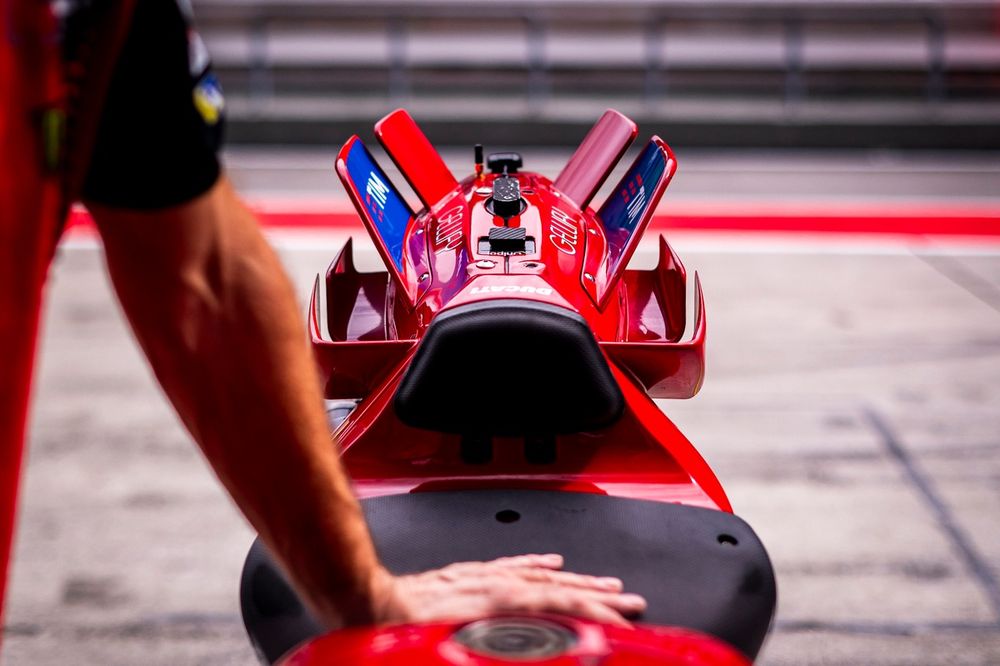
The winglets on the tail of the Ducati GP25.
But safety was not the only reason behind this ban. The governing body also aimed to prevent MotoGP from turning into an arms race, where competitors with enormous budgets could dominate through relentless technical innovations.
The Return of Winglets: Integration Rather Than Addition
This prohibition did not mark the end of aerodynamic development, but rather the beginning of a new era. Starting in the 2017 season, the rules were relaxed to allow the integration of aerodynamic elements into the fairing, provided they were no longer protruding or sharp. This change led to a revolution in motorcycle design, with more complex fairing shapes designed as channels to guide airflow.
The new rules imposed a limited number of aerodynamic fairings per season for each team, subject to prior approval by the FIM. This aimed to avoid a race of relentless innovation and to find a compromise between technical advancements and cost control.
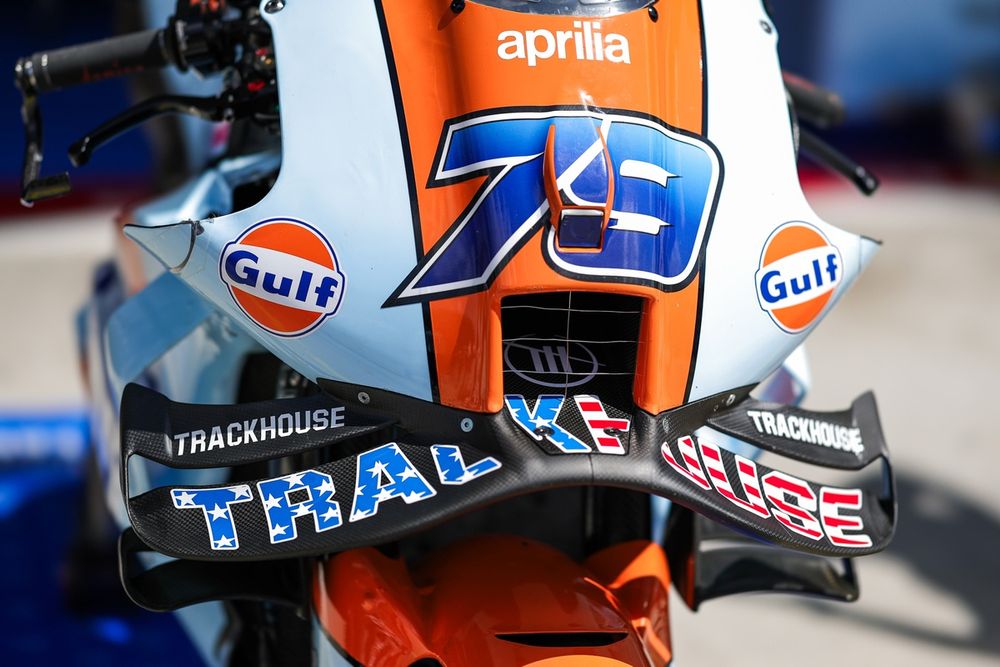
The front end of the Aprilia RS-GP used in 2025 by the Trackhouse Racing team.
What Role Do Winglets Play in MotoGP?
The changes brought about the advent of the modern era of aerodynamics in MotoGP. Today, motorcycles are equipped with multi-level winglets, side parts acting as flow conduits, diffusers, and even winglets positioned on the swingarm to optimize airflow. These innovations improve stability during braking, smooth out high-speed handling, and increase grip during acceleration out of corners.
However, not everything is rosy. Many riders believe that while aerodynamics allows for impressive lap times, it can also detract from the quality of racing. Winglets create dirty air, generating turbulence for a rider following another motorcycle. Staying close to a competitor becomes perilous, with an increased risk of losing stability and overpressure on the front tire.
This disruption of airflow can reduce tire cooling, leading to dangerous pressure spikes. Grip decreases, making overtaking more challenging. Thus, some riders argue that MotoGP is losing intensity, as these aerodynamic effects complicate the much-valued close duels.
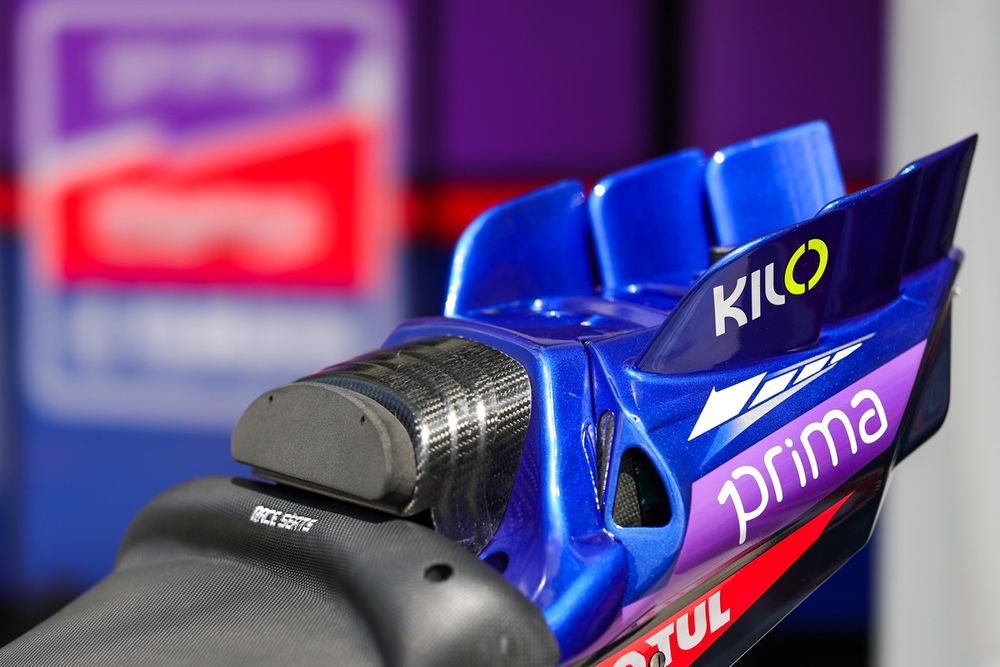
The rear of the Yamaha YZR-M1 of the Pramac Racing team in 2025.
New Rules in 2027: Towards Aerodynamic Restrictions
In response to these concerns, the FIM has developed a new technical regulation for 2027, bringing major changes in aerodynamics. The goal is to reduce the impact of winglets and fairings on motorcycle behavior to promote closer and more competitive racing.
These new rules will limit the maximum width of the front fairing to 550 mm, down from 600 mm previously. Additionally, the front tip of the nose must be moved back by about 50 mm. Rear aerodynamic elements will be reduced by 10 cm, and only one update will be allowed per season.
These measures aim to diminish the aerodynamic advantage provided by large winglets and minimize dirty air. Manufacturers will thus have less space to install wide and prominent winglets. In addition, there will be a total ban on height adjusters and holeshot devices, which previously adjusted the balance of motorcycles and boosted their performance at the start.
With these new regulations, the intention is to refocus racing on rider skills rather than aerodynamic technologies. Many hope that these changes will lead to tighter battles and fewer issues with front tire overheating, although some still doubt that these restrictions go far enough.