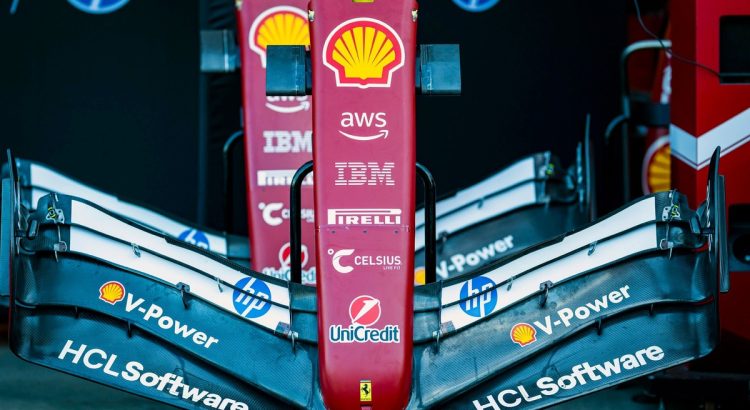
The 2026 season is shaping up to be a true earthquake in the world of Formula 1, with major technical changes that could redefine the competition dynamics. Between chassis and engines, teams will need to demonstrate unprecedented ingenuity to come out on top. Ferrari, leading the pack, will need to deploy a clever strategy to avoid being left behind.
An unprecedented regulatory upheaval
This year, Formula 1 will experience its most significant technical upheaval in decades, with deep regulatory changes affecting both chassis and engines. It’s a bit like deciding to change the rules of Monopoly mid-game: adaptation will be necessary very quickly. Inevitably, some teams will arrive at the first race of the season with better solutions than others. But for those starting with a disadvantage, the task will be all the more challenging, not only due to the limits imposed on development but also because of a calendar where the first series of races will consist exclusively of events outside Europe.
The budget cap: a new challenge
The F1 budget cap will also evolve in 2026, forcing teams to adopt a more holistic view in planning their developments. Transport costs, often overlooked, will need to be meticulously assessed, particularly for shipping new parts to distant destinations. Financial management is becoming almost as crucial as performance on the track. Frédéric Vasseur, Ferrari’s director, did not mince his words: “I believe the determining factor for the introduction of developments will not be the wind tunnel development capacity.”
A thoughtful strategy for developments
In an environment where every euro counts, one must be clever. Vasseur specifies: “The determining factor will be the budget cap. This means we will need to be smart in our use of the budget available for development.” For Ferrari, this involves juggling between innovations and costs. For example, introducing several developments during the early races may seem appealing, but it risks burning a substantial portion of the development budget, especially if it requires shipping costly parts.
The logistical challenges of the early races
The 2026 calendar kicks off strongly with a double weekend in Australia and China, followed by Japan, before heading to the Middle East. This series of races will impose unprecedented logistical challenges. Teams will need to prioritise sending smaller parts in the personnel’s luggage while delaying the shipment of larger and more expensive items. Vasseur realistically highlights: “It is certain that if you have a development on the front wing flap, it costs less to send to China than a floor.”
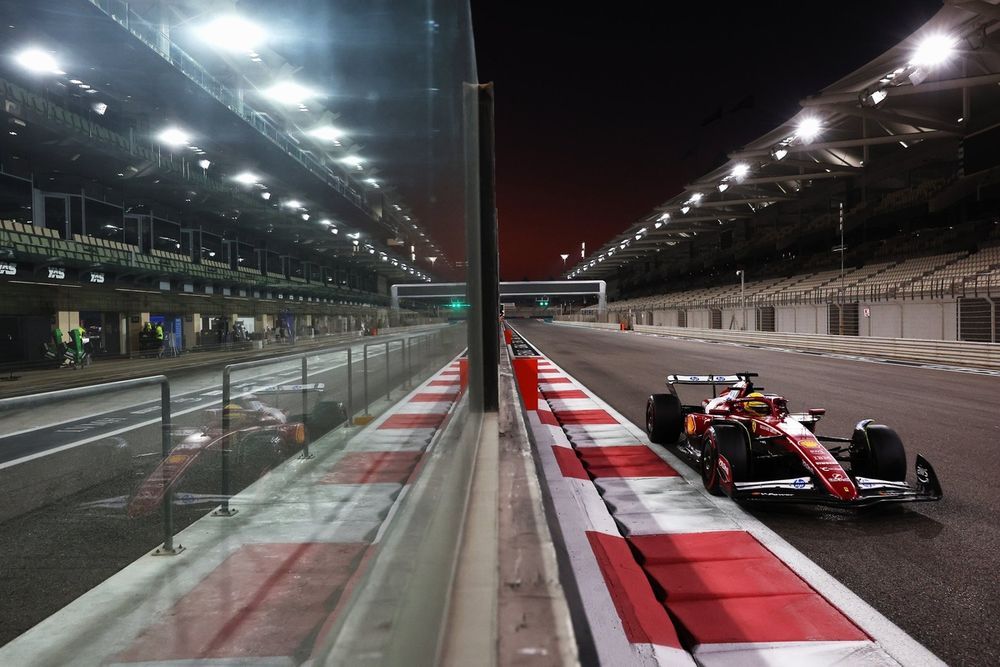
Lewis Hamilton and Ferrari: a legendary duel
Development under pressure
Mastering transport costs will be crucial to maintaining a high development pace. The hierarchy of teams is expected to be more spread out at the start of the season, contrasting with the relatively tight order observed in 2025. Vasseur adds: “I am also really convinced that in 2025, the image of the Bahrain tests was almost that of the last race in Abu Dhabi.” Indeed, 2026 could see a completely different dynamic where car development will be more intense and unpredictable.
Towards an unpredictable season
Vasseur predicts: “There will be a huge rate of development throughout the season.” Unlike 2025, where teams had already stabilised their performances, this new season could see unexpected turnarounds. Far from being a smooth ride, the 2026 season could resemble an obstacle course where every turn could be decisive.
As Ferrari prepares to face these complex challenges, it will be fascinating to see how the team manages to balance innovation, strategy, and budget constraints. With a bit of luck, the cavallino rampante will be able to turn these challenges into opportunities, thus redefining its future on the circuits.