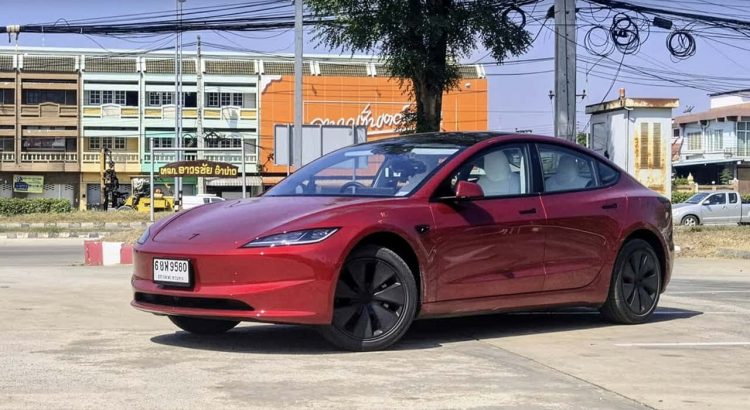
The Tesla Model 3, this champion of electromobility, has recently managed to eclipse the figures announced by authorities regarding autonomy. With over 909 km traveled on a single charge, it surpasses its WLTP certification by 20% and its EPA range by 50%. It’s a bit like a convertible supercar promising leisurely drives and transforming into a true speedster on the road.
A Range Challenge Dependent on Many Factors
The range of an electric vehicle is not simply a matter of numbers set in stone. It depends on a myriad of factors, from battery capacity to motor efficiency, as well as weight, aerodynamic coefficient, and outside temperature. But that’s not all! Your driving style, speed, and even the use of heating or air conditioning significantly influence this range. Using these energy-consuming features inevitably reduces range, although electric vehicles equipped with a heat pump are less affected.
The announced range values, particularly those from the WLTP standards in Europe, are often a tad optimistic. Indeed, they generally sit 20 to 30% above the estimates provided for the same models in the United States. That said, with a bit of patience and without being rushed, it is entirely possible to exceed these figures in real conditions. Yes, even for you who consider yourself a Sunday driver!
Bjørn Nyland and His Impressive Demonstration
A certain Bjørn Nyland proved this by taking the wheel of a Tesla Model 3 Long Range with rear-wheel drive in Thailand. Aiming to exceed the announced WLTP range of 750 km for this version, he adopted a particularly effective method: driving at a constant speed of 80 km/h on the speedometer, or about 77 km/h measured by GPS. A true marathon runner of the electric!
His route was cleverly designed, starting from Bangkok and returning to the city. As he approached Bangkok, the car still indicated 15% charge in the battery. Rather than turning back, Bjørn chose to continue his journey to further deplete the battery and maximize his feat. A bold strategy that paid off!
Ideal Conditions for a Range Record
The outside temperature during this challenge played a key role, fluctuating between 27°C and 29°C. This allowed the car not to draw too much energy to keep the battery within its optimal operating range. If the heat had been more intense or if traffic had been denser, the result would likely have been less spectacular. In short, Bjørn carefully orchestrated his moment and route to optimize his chances of achieving such a remarkable result.
A Range That Makes You Think
This adventure not only highlights the impressive capabilities of the Tesla Model 3; it also raises questions about our expectations regarding electric vehicles. Is it reasonable to expect these cars, often perceived as solutions for the future, to deliver performance that exceeds the announced figures? Or should we settle for estimates that, like a promise in an action movie, are often more spectacular than reality?
Ultimately, Bjørn’s experience is a reminder that the range of an electric vehicle is much more than just a number on a brochure. It also depends on our driving style and the conditions in which we operate. That’s the beauty of electromobility: every trip can become a unique adventure.
Conclusion: The Future of Electric Vehicles
As the range of electric vehicles continues to evolve, it is essential to keep in mind that every driver can influence these performances through their driving style. The Tesla Model 3, with its recent feats, paves the way for a new era for electric cars. Who knows what other records will be broken in the months and years to come? One thing is certain: electromobility is here to stay, and it promises to be as exciting as a high-speed race on the track.