

Porsche is gearing up for a strategic shift, considering the development of a hypercar that may not be electric, a surprising choice in an increasingly electrified market.
It’s no understatement that Porsche faces challenges. The Zuffenhausen manufacturer reported a 10% drop in sales last year, achieving 279,449 units. This decline is largely attributed to a 26% decrease in sales in the Chinese market, compounded by difficulties in Europe, worsened by the planned end of production for the thermal Macan in mid-2024, followed by the 718 Boxster and Cayman models. However, amid this delicate situation, promising opportunities are beginning to emerge.
The German brand is focusing on developing new SUVs with internal combustion engines, including a mid-size model and a larger one designed for up to seven passengers. These vehicles aim to capture market share in high-margin segments. Additionally, the 718 models may return as electric offerings while still being available with gasoline engines. The strategy seems to be taking shape: diversify the lineup while retaining thermal models.
Hypercar Set to Rekindle Enthusiasm
During a recent press conference, CEO Michael Leiters mentioned the possibility of creating a new high-end sports car positioned above the iconic 911. The stakes are clear: Porsche needs to develop more profitable models to improve its financial situation. In other words, the brand aims to attract enthusiasts with extraordinary performance.
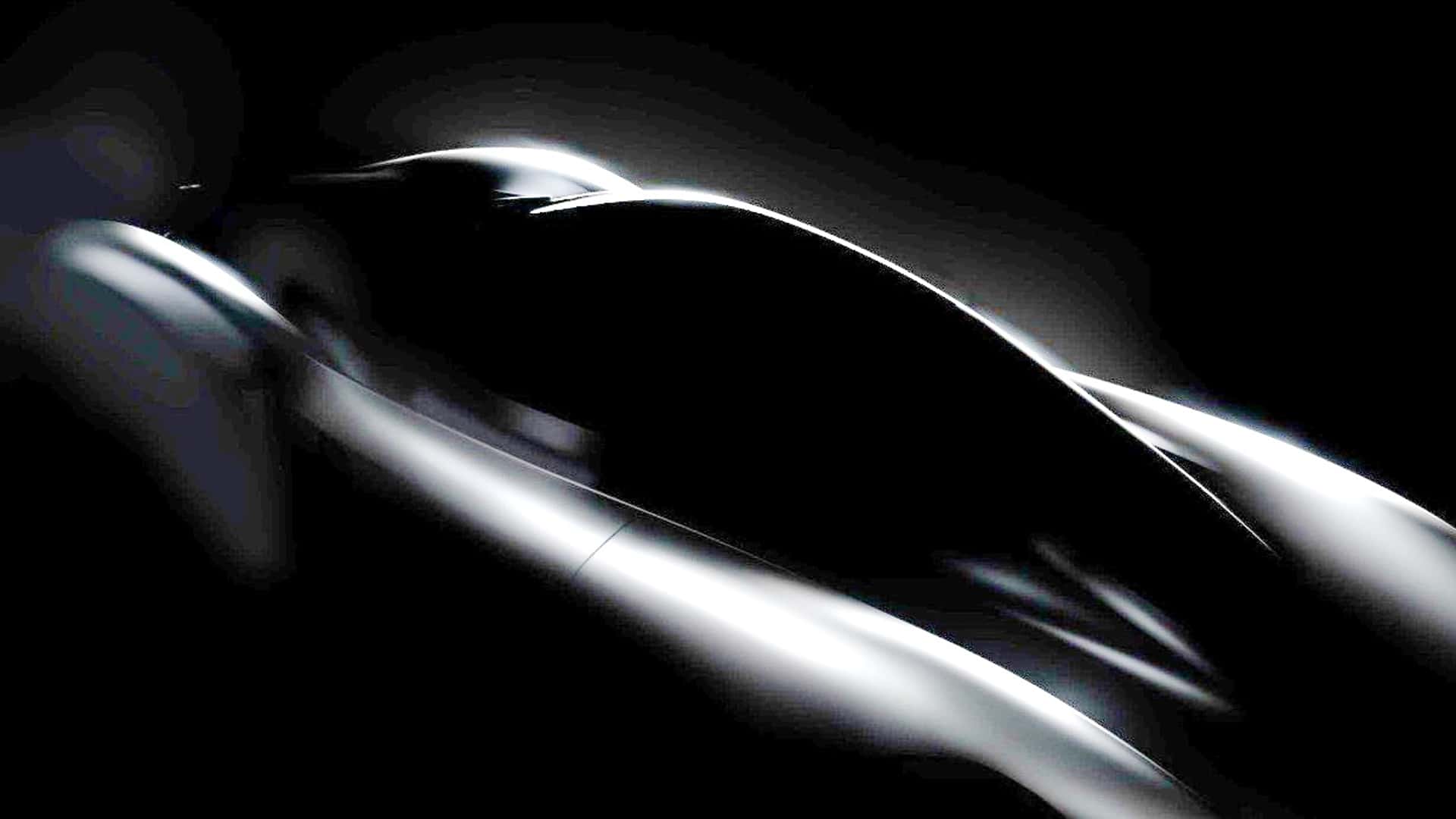
Teaser image from Porsche

Porsche Mission X concept
Photo: Porsche
« We are exploring the possibility of expanding our product portfolio to advance in higher-margin segments. In this context, we are interested in models and derivatives above our current two-door sports cars and above the Cayenne. »
This statement is more than just a marketing catchphrase. Internal documents reveal the silhouette of a mysterious vehicle that does not resemble either the 911 or an SUV. Connecting the dots, it seems that Porsche is indeed considering a supercar, or perhaps even a hypercar, as suggested by Leiters.
This intriguing silhouette closely resembles the Mission X model from 2023, designed to herald the supercar of the future. However, it’s hard to say if this is the same prototype, even if the similarities are striking. What’s certain is that this future car should stand out with one key element: its engine.
Internal Combustion Engine at the Core of Strategy
If the production version of the Mission X comes to fruition, it could represent the pinnacle of performance and excitement at Porsche. However, it’s highly likely that it will forgo full electrification. The reason? In today’s market, a fully electric hypercar seems less appealing to automotive enthusiasts.
Mate Rimac, founder of the eponymous brand specializing in electric hypercars, stated two years ago that premium segment customers still prefer combustion engines. This underscores an undeniable reality: even as the automotive world shifts toward electrification, enthusiasts remain loyal to internal combustion engines.

Porsche Mission X concept
This statement from Rimac makes sense, considering that Porsche holds a 45% stake in the Bugatti Rimac joint venture. The manufacturer is well aware of the current dynamics in the electric supercar market. Lamborghini, for example, has also decided to retain gasoline engines in its new models, such as the Revuelto.
If Porsche greenlights this new sports car, it’s almost certain that it will be equipped with a gasoline engine. Hybridization may be considered, but the thermal DNA will likely be preserved. In fact, Michael Leiters stated that the brand « extends the lifespan of its thermal and hybrid offerings. »
Brand Image Challenge
The choice of a thermal hypercar may also be seen as a defensive strategy against rapidly advancing competition. In the face of rising electric brands like Rimac and Tesla, Porsche must deftly navigate between tradition and innovation. The brand’s reputation is built on its sporting heritage and its ability to deliver unmatched driving experiences.
By opting for a thermal hypercar, Porsche could not only attract purists but also strengthen its image. This could also allow it to stand out in a segment where electrification has become the norm.
Conclusion
- Porsche is considering a hypercar that may not be electric.
- The brand aims to rebuild sales through diversification.
- A thermal supercar could attract automotive enthusiasts.
- Combustion engines remain preferred in the premium segment.
- Porsche strengthens its image by navigating between tradition and innovation.
In summary, this strategy could prove beneficial for Porsche in the medium term. By focusing on a thermal hypercar, the manufacturer could not only regain part of its passionate clientele but also stand out in a market where electrification is ubiquitous. It remains to be seen how competitors will respond to this bold move.


